
Plants That GROW in the ShadeIf you're finding it challenging to fill a shady location in your landscape with plants, you are not alone. Luckily, there are many plants that love and can thrive in lower light locations in our climate. We'll highlight some of our favorite shade-loving plants in this article, but first, let's talk about the meaning of "shade" when describing a plant's light requirements. 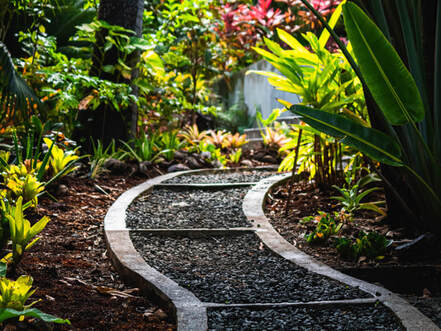 Defining Shade: Shade conditions mean something a little different to everyone, so let's simplify by describing what plant descriptions really mean when they include the light requirements "part shade," "shade," or "part shade to shade." Generally, a part shade location is one that receives less than 6 hours of sunlight throughout the day. A good example would be an area that receives gentle morning sun and/or late evening sun, but no exposure to direct sunlight during the hottest parts of the day (midday through afternoon), especially during the Summer months. Plants that thrive in part shade appreciate less intense direct sunlight when they happen to get it. A shade location is one that receives less than 4 hours of sunlight throughout the day. For example, an area beneath canopy trees that receives filtered or dappled light throughout the day would be described as shade. Be mindful that areas that receive no sunlight at all, or dense shade locations, are not likely to support healthy plant growth. Finally, "part shade to shade," simply means that the plant can tolerate either condition - "part shade" or "shade." Oftentimes, plants in this category may grow faster or larger when sited in part shade, but they will tolerate shade just fine. Favorite Plants for Shade:The following is a short list of some of our best-selling plants for shade. For a complete selection of shade trees, shrubs, perennials, and annuals, we invite you to visit our Garden Center as our inventory changes often! All of these popular plant types can grow in part shade or shade conditions. *Asterisk denotes plants that are typically deer non-preferred. However, deer will eat many non-preferred plants in heavily grazed areas where food is scarce. 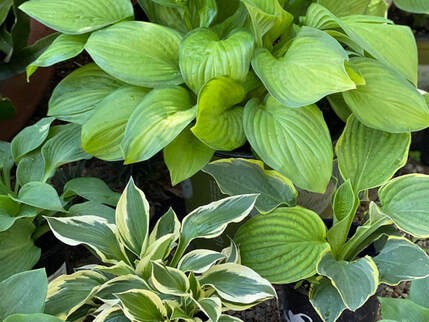 Hosta Plants Hostas Hostas feature large, textured leaves in cool shades of green, blue-green, cream, or yellow, plus blooms that attract pollinators. These warm-season perennials will die back to the ground in the Winter and produce fresh foliage every Spring. Evergreen Ferns * Evergreen ferns such as the Autumn Fern or Holly Fern hold up very well over our mild Winter season and provide a soft, delicate texture to the year-round shade garden. 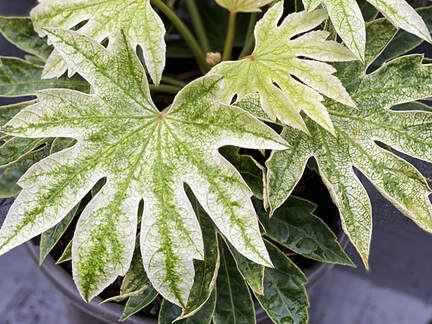 Fatsia Spider's Web Fatsia japonica Fatsia is a mound-shaped evergreen shrub that lends a tropical feel to the shade with large, palmate leaves. Spider's Web offers a unique twist on an old favorite with white speckles on its leaves and a small stature of just 4-5' tall x 3-4' wide! Flax Lily * The cream and green variegated foliage of this evergreen perennial brightens shadier spots and provides welcomed contrast to the green tones commonly found in the shade. 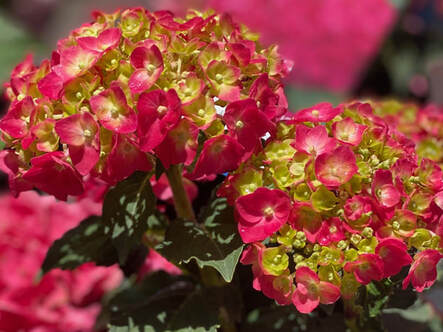 Summer Crush® Bigleaf Hydrangea Bigleaf Hydrangeas Loved for their large ball-shaped blooms ranging in color from pink to purple to blue, bigleaf hydrangeas are shade garden mainstays that pair well with hostas, ferns, and other shady companions. Philodendron selloum * A large-growing tropical beauty that loves the shade, Philodendron selloum has huge showy foliage and a lovely mounded habit that can fill up a generously-sized space of approximately 6-8' tall x 6-8' wide! 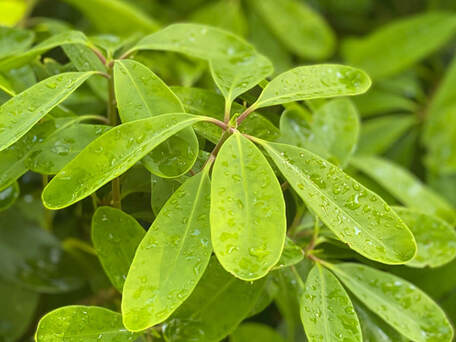 Miss Scarlett® Anise Anise * A privacy shrub with aromatic foliage that deer don't prefer. Space-saving varieties such as Miss Scarlett® bloom brilliant red flowers in Spring and have a mature size of just 4-6' tall x 3-4' wide. Mahonia * Mahonia is an evergreen shade super star with varieties such as Soft Caress offering feathery foliage and yellow blooms in late winter. 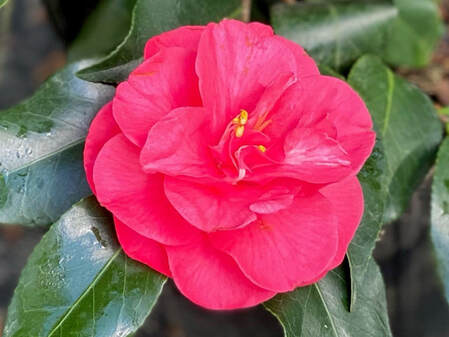 Christmas Beauty Camellia japonica Camellias Queens of the Fall and Winter garden, Camellias not only offers year-round glossy foliage, but they bear colorful blooms during Fall (Camellia sasanqua) and Winter (Camellia japonica) while the rest of the garden sleeps. Dwarf Sabal Palms * The Sabal minor, or "Dwarf Palmetto," is a versatile evergreen that tolerates a wide variety of conditions including damp soils and sea spray. Reaching 4-6' tall and wide, this is a choice palm for compact spaces. 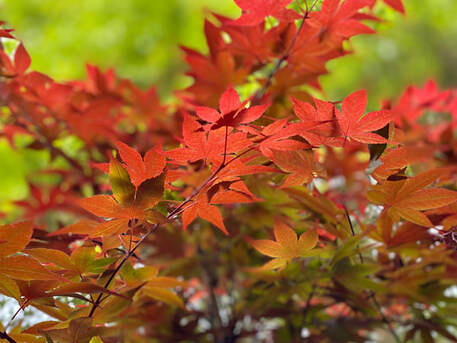 Japanese Maple Tree Japanese Maple Trees
Japanese Maples are one of our most popular ornamental trees, well known for their colorful Spring and Fall foliage interest. Most Japanese Maple trees prefer shadier locations in our climate. There are many varieties to choose from, all of which appreciate well-draining soil. It's time for pre-Emergent! Brownswood Nursery discusses using Hi-Yield Pre-Emergent Herbicide to reduce WEEDS. Have you applied pre-emergent this season? Stop weeds BEFORE they start growing in your lawn and flower beds with Hi-Yield Turf & Ornamental Weed & Grass Stopper. Apply now for superior suppression of Crabgrass and other broadleaf weeds. Watch our video for more information!
Kiawah and Seabrook Island gardeners, take note!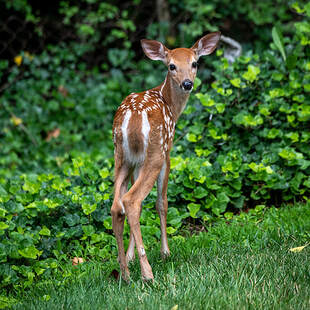 As beautiful as nature and wildlife can be, it is certainly discouraging to have your newly planted landscape nibbled on - or worse, devoured - by deer. Deer damage has become increasingly troubling in our Kiawah and Seabrook Island communities where deer are eating landscape plants that had previously been of no interest to them. The good news? There are trees, shrubs, grasses, perennials, and palms we've used in landscape designs on Kiawah and Seabrook Island that seem to remain off of the dinner menu for foraging deer. We've compiled the following list for your reference: 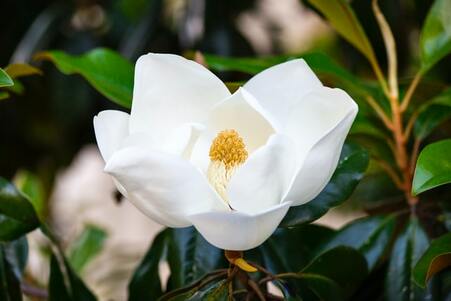 Magnolia Deer Non-Preferred TREES
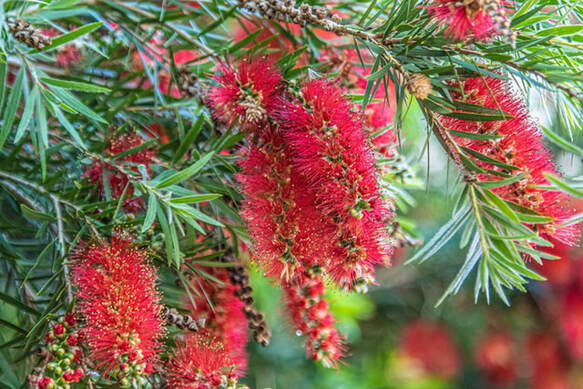 Bottlebrush Deer Non-Preferred Shrubs
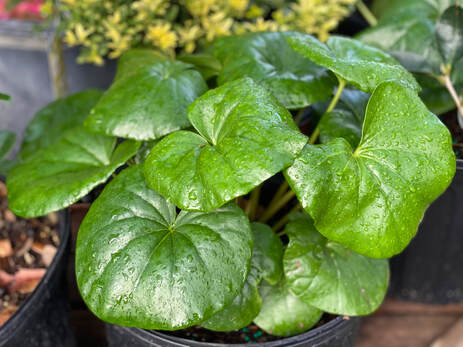 Farfugium Deer Non-Preferred Perennials
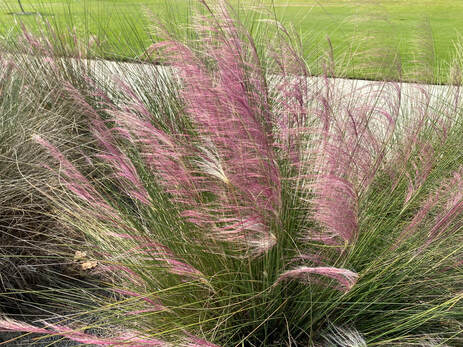 Muhly grass (Sweetgrass) Deer Non-Preffered Grasses
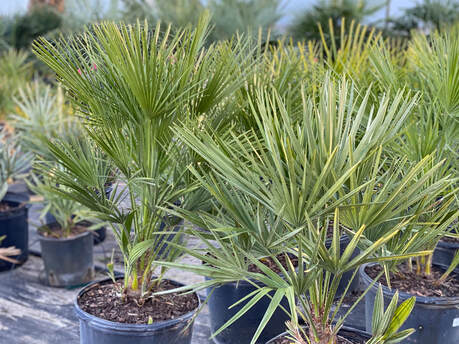 European Fan Palm Deer Non-Preffered Palms
|
Categories
All
Archives
March 2024
|
 RSS Feed