
Brownswood Nursery & Landscape

  • Home
  • Our Roots
    • Careers
  • Service Areas
    • Johns Island
    • Kiawah Island
    • Seabrook Island
    • Downtown Charleston
    • Mt. Pleasant
    • Daniel Island
    • West Ashley
    • More Locations
  • Services
    • Landscape Design
    • Landscape Build
    • Maintenance
  • Portfolio
  • Garden Center
    • Brownswood Grown
    • The Gardener's Corner
    • NEW - Quick Sketch
    • Classes & Events
  • SHOP
  • Home
  • Our Roots
    • Careers
  • Service Areas
    • Johns Island
    • Kiawah Island
    • Seabrook Island
    • Downtown Charleston
    • Mt. Pleasant
    • Daniel Island
    • West Ashley
    • More Locations
  • Services
    • Landscape Design
    • Landscape Build
    • Maintenance
  • Portfolio
  • Garden Center
    • Brownswood Grown
    • The Gardener's Corner
    • NEW - Quick Sketch
    • Classes & Events
  • SHOP

Southern Charm in Bloom: Choosing the Perfect Camellia for Your Charleston Garden

8/28/2025

 
If you’ve lived in the Lowcountry long enough, you know camellias are more than just plants - they’re part of Charleston’s story. These graceful evergreens bring timeless Southern beauty to our gardens, with glossy foliage and blooms that brighten even the grayest winter days. At Brownswood Nursery & Landscape, we carry a wide selection of camellias - sasanqua, japonica, sinensis, and hybrids - each with its own character and best use in the landscape. Let’s walk through the options so you can pick the perfect fit for your Charleston garden.
Picture
Picture
Camellia sasanqua
  • Bloom Time: Early fall into early winter
  • Size: Typically 6–12 feet tall, 4–8 feet wide
  • Habit: Graceful, airy, often more compact than japonicas
  • Landscape Use: Excellent for hedges, foundation plantings, and as specimen shrubs. Their smaller leaves and abundant blooms make them versatile and manageable.
Picture
Camellia japonica
  • Bloom Time: Mid- to late winter into spring
  • Size: 10–20 feet tall, 6–10 feet wide (can become small trees over time)
  • Habit: Dense, upright form with larger leaves and show-stopping blooms in a wide array of colors and forms.
  • Landscape Use: Perfect as specimen plants or as a focal point in shaded woodland gardens.
Picture
Camellia sinensis (The Tea Camellia)
  • Bloom Time: Fall
  • Size: 6–15 feet tall, depending on pruning
  • Habit: Upright shrub with small white fragrant flowers
  • Landscape Use: Historically prized for tea leaves, sinensis adds both function and charm to Charleston gardens. It thrives as a hedge or informal shrub, especially for those who love gardening with purpose.
Picture
Hybrid Camellias
  • Bloom Time: Varies by cross - often chosen for extended or unusual bloom seasons
  • Size & Habit: Wide range; often bred for cold-hardiness, compact growth, or unique flowers
  • Landscape Use: Ideal for gardeners looking for something a little different, hybrids bring new colors, forms, and adaptability to Lowcountry landscapes.
Picture
Camellias are hardy but reward proper planting and care with decades of beauty. Here’s how to set them up for success:
  • Site Selection: Choose a location with partial shade (morning sun, afternoon shade is best). Protection from harsh winds helps preserve blooms.
  • Soil: Camellias prefer slightly acidic, well-draining soil.
  • Planting: Dig a wide, shallow hole—camellias don’t like being planted too deep.
​At Brownswood Nursery & Landscape, we recommend planting with our premium potting mix and Espoma® Organic® Bio-tone® Starter Plus Fertilizer to encourage strong root growth. For step-by-step instructions, check out our Planting Guide.
Download Our Planting Guide
  • Watering: Keep soil evenly moist the first year; once established, camellias are fairly drought tolerant.
  • Mulching: A 2–3" layer of pine bark or straw helps maintain moisture and suppress weeds.
  • Pruning: Lightly prune after blooming to shape and remove dead wood.
Picture
Whether you want the early flush of sasanquas, the bold winter color of japonicas, the fragrance and history of sinensis, or the novelty of hybrids, camellias are truly the queens of the Charleston garden. With the right selection and care, they’ll be a legacy in your landscape - bringing beauty for generations.
​
Visit us at Brownswood Nursery & Landscape and let our team help you find the camellia that speaks to your garden’s story.
Picture

Tiny But Mighty – 10 Dwarf SHRUBS that Make a Big Impact

7/21/2025

 
When space is limited but your landscape goals are big, dwarf shrubs are the answer. These compact powerhouses are perfect for foundation plantings, low hedges, and mid-layer accents in garden beds. They also shine in containers, offering color, structure, and texture year-round. Whether you’re designing a small courtyard or simply want low-maintenance plants with high visual impact, these “tiny but mighty” selections pack a punch.

Below, we’re spotlighting some of our favorite dwarf shrubs that thrive in the Lowcountry’s climate and look stunning in both formal and relaxed garden designs.
Picture
Dwarf Yaupon Holly
​
Dwarf Yaupon Holly is a tidy, evergreen shrub with small, glossy leaves and a naturally mounded shape. It’s drought-tolerant, highly adaptable, and well-suited for low hedges, borders, or accent plantings. Native to the Southeast, it brings both beauty and resilience to the landscape, needing little more than occasional shaping to maintain its form. Deer non-preferred.
Picture
Loropetalum 'Crimson Fire'
​
With deep burgundy foliage and bright pink fringe-like blooms, ‘Crimson Fire’ Loropetalum offers dramatic color contrast in a compact form. This dwarf variety grows slowly and stays under 5 feet tall, making it a great choice for small garden beds or as a striking container specimen. Its year-round color and easy-care nature make it a standout.​
Picture
Pringle Yew
Ideal for formal landscapes or clean-lined plantings, Pringle Yew features soft, dark green foliage and a dense, compact habit. This tough shrub thrives in the heat and humidity of Charleston. It’s excellent for shaping into low hedges or used as a neat foundation plant that complements both modern and traditional architecture. Deer non-preferred.
Picture
Little John Dwarf Bottlebrush
​
This Australian native is a showstopper with its fuzzy, bright red bottlebrush blooms and blue-green foliage. ‘Little John’ stays compact and dense, typically reaching 3 feet tall and wide. It attracts hummingbirds and pollinators while standing up well to heat and drought, making it an eye-catching and wildlife-friendly option for containers or sunny beds. ​Deer non-preferred.
​
Picture
Cryptomeria ‘Globosa Nana’
This dwarf variety of Japanese Cedar offers soft, rich green foliage in a rounded, textural form. Growing slowly to about 3–4 feet tall and wide, it’s a unique choice for year-round interest. It adds a whimsical, almost sculptural quality to gardens and looks fantastic in containers or as a focal point in a low-maintenance bed.
Picture
Dwarf Encore® Azaleas
​
Encore® Azaleas are beloved for their repeat blooming habit, and the dwarf varieties are perfect for smaller spaces. With heights ranging from 2 to 3 feet, these evergreen shrubs bring bursts of color in spring, summer, and fall. Use them in mass plantings, as a low flowering hedge, or to brighten up a patio with blooms from shades of coral to pure white
Picture
Dwarf Burford Holly
​
A classic choice for Lowcountry landscapes, Dwarf Burford Holly has shiny, dark green leaves and bright red berries in winter. Its upright, compact growth habit makes it a versatile plant for hedges, screens, or accent plantings. It’s tough, adaptable, and tolerates pruning well—ideal for structure and seasonal interest in any garden.
Picture
Cinnamon Girl® Distylium
​Cinnamon Girl® Distylium is a low-growing evergreen with soft, blue-green foliage and a graceful, mounding habit. In late winter, it produces small, red-maroon flowers that add subtle seasonal interest. Its compact size (2–3 feet tall and 3-4 feet wide) and exceptional disease resistance make it a smart, low-maintenance alternative to boxwood or hollies. Use it as a foundation plant, in mass plantings, or to add evergreen structure to mixed beds.
Picture
Drift® Roses
​
Drift® Roses combine the beauty of traditional roses with the easy care of groundcovers. These compact, repeat-blooming shrubs stay around 2 feet tall and bloom profusely from spring through fall. Available in a variety of colors—from peach to coral to red—they’re ideal for borders, containers, or filling in sunny landscape pockets. Drift® Roses are disease-resistant, low-maintenance, and perfect for adding long-lasting color to Charleston gardens.
Picture
Sunshine Ligustrum
​
Sunshine Ligustrum is a standout for vibrant, year-round color with its bold, golden-yellow foliage that adds brightness and contrast to any landscape. This sterile, non-invasive variety of ligustrum is easily maintained at 3–4 feet tall and wide, making it an excellent choice for low hedges, foundation plantings, or containers. Heat-tolerant, it thrives in full sun and requires minimal maintenance - just occasional pruning to maintain its tidy form.

5 Quick Tips for Pruning & Maintaining Dwarf Shrubs
  1. ​Know the natural shape – Most dwarf shrubs require minimal pruning. Trim only to enhance their form, not to force a shape.
  2. Prune after flowering – For bloomers like azaleas and bottlebrush, prune just after flowering to avoid removing next season’s buds.
  3. Use clean tools – Sharp, sanitized shears prevent disease and allow for cleaner cuts.
  4. Avoid heavy pruning – Cutting back too much can stress the plant or ruin its natural structure.
  5. Mulch & monitor – Keep a 2–3” layer of mulch around your shrubs and check for pests and disease during routine maintenance.

Need Help Choosing the Right Dwarf Plants?
Picture
FREE Garden Center Quick Sketch
Our Garden Center Quick Sketch service is a free offering where a Nursery Professional helps you plan the perfect planting layout. Book an appointment today to get started on your next landscape project. 
Book a Quick Sketch
Get inspired by exploring our plant collection at shop.brownswoodnursery.com.

Hydrangeas for Shade or Sun

5/1/2025


Enjoy a Bouquet on Every Stem!

Hydrangeas are one of our customers' favorite flowering shrubs. With big, bouquet-sized blooms in shades of blue and pink to lime and white, it's easy to see why! Visit our Garden Center soon to choose from dwarf and full-sized varieties for shade or sun!

Picture
Bigleaf hydrangea (Hydrangea macrophylla)
Hydrangeas for shade in the Charleston area include Bigleaf, Mountain, and Smooth types.

Bigleaf hydrangeas (Hydrangea macrophylla) bloom pink or blue (depending on soil pH) late Spring into Summer and are commonly described as mopheads due to their large, ball-shaped blooms. They have wide, textured leaves and sturdy, thick stems. These hydrangeas bloom on old wood, which means they form next season's flower buds on their stems before they bloom. Generally, it is okay to prune away spent flowers. However, to avoid cutting of next year's blooms, it's advisable to avoid pruning this type of hydrangea except for removal of dead branches in Spring once the plant starts to leaf out.
Picture
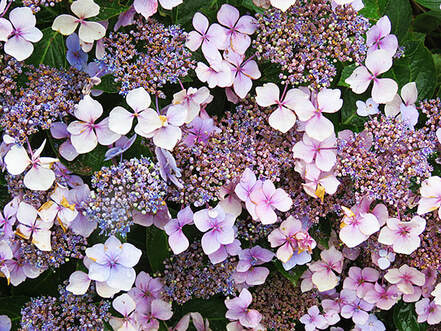
Mountain hydrangea (Hydrangea serrata)
Mountain hydrangeas (Hydrangea serrata) bloom in Summer and are also referred to as lacecap hydrangeas as their blooms appear dainty and delicate like lace. Their leaves and stems look a lot like the bigleaf hydrangeas - in fact, it's hard to tell the difference when they are not blooming! These hydrangeas bloom first on old wood. Varieties in this category that rebloom form more flower buds on new growth and bloom again later in the season. If you're uncertain as to whether you have a variety that is reblooming, err on the side of caution when pruning - prune modestly during the growing season to remove spent flowerheads and then only to remove dead branches when leaves emerge in Spring.

Smooth hydrangeas (Hydrangea aborescens) bloom in Spring with white or pink ball-shaped blooms. The foliage of these hydrangeas is thinner and more delicate than the bigleaf or mountain hydrangeas. These hydrangeas also have woody stems and bloom on new wood. This means buds form on the current season's growth, so it's okay to wait until the plant has gone dormant in the Fall or until early Spring to prune them.

All of these shade hydrangeas appreciate being shielded from intense, direct sunlight in the afternoon - especially during our hot summers. Gentle morning sun, dappled light throughout the day, or shade for the majority of the day are ideal sunlight situations for these varieties.

Hydrangeas for sun in the Lowcountry include Panicle and Oakleaf types.
Picture
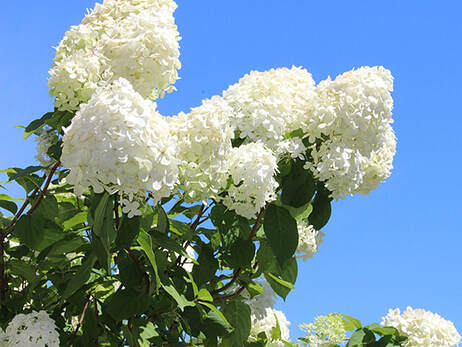
Panicle hydrangea (Hydrangea paniculata)
Panicle hydrangeas (Hydrangea paniculata) bloom mid to late Summer into early Fall. Their flowers first arise lime-green to white, filling out to a full cone shape that turns blush to red as the weather cools down in the Fall. These hydrangeas have woody stems and thinner, narrower leaves than the bigleaf hydrangeas. Panicle hydrangeas bloom on new wood with their buds and blooms occurring in the same season, so it is safe to prune in late Fall or early Spring while the plant is dormant without risk of removing flower buds.
Picture
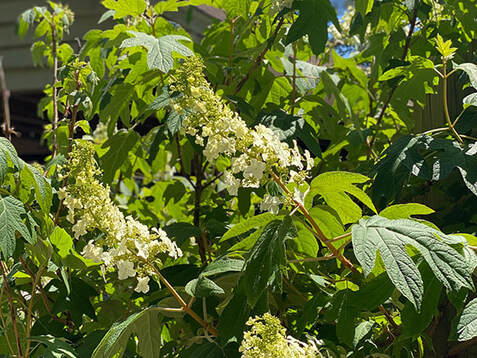
Oakleaf hydrangea (Hydrangea quercifolia)
Oakleaf hydrangeas (Hydrangea quercifolia) are one of the more unique hydrangea types, offering showy, cone-shaped, white flowers in early summer. Oakleaf hydrangeas have woody stems, and as their name suggests, large, oak-shaped leaves. Like panicle hydrangeas, oakleaf hydrangea blooms take on rosy tones as the weather cools down in Fall. And, BONUS! Oakleaf hydrangea foliage turns a beautiful red as the shrub prepares to go dormant in the Winter. Oakleaf hydrangeas bloom on old wood, so take care to prune moderately, if at all, immediately after flowering for size and when new growth emerges in Spring to remove dead branches.

Of the sun hydrangeas, panicle hydrangeas are the toughest when it comes to full sun in our climate. Oakleaf hydrangeas come in second with the ability to handle full sun once acclimated.

When considering hydrangeas for your landscape, take note of the amount of space you have available and how much sunlight the area receives at what time of day. At our Garden Center, we carry dwarf hydrangeas and full-sized hydrangeas. Not sure which type is right for your landscape? Our Nursery Professionals will be happy to assist!

    Categories

    All
    Charleston Landscaping
    Evergreens
    Gardening Calendar
    Garden Problem Solving
    Garden Tips
    Indoor Plants
    Landscape Design
    Native Plants
    Privacy Plants
    Shrubs
    Soil Amendments
    Trees
    Videos

    Archives

    December 2025
    November 2025
    October 2025
    September 2025
    August 2025
    July 2025
    June 2025
    May 2025
    March 2025
    February 2025
    January 2025
    December 2024
    October 2024
    September 2024
    August 2024
    July 2024
    June 2024
    May 2024
    January 2024
    December 2023
    October 2023
    August 2023
    November 2022
    February 2022
    September 2021
    July 2021
    June 2021
    April 2021
    March 2021
    February 2021
    January 2021
    December 2020
    November 2020
    October 2020
    September 2020
    August 2020
    July 2020
    June 2020
    May 2020
    April 2020
    March 2020
    February 2020
    January 2020

    RSS Feed

CONTACT US

(843) 559-3425
[email protected]
1290 Brownswood Road
​Johns Island, SC 29455
Employment Application
[email protected]

HOURS OF
​OPERATION

Monday-Friday 8:00am-5:00pm
Saturday 9:00am-4:00pm
Closed on Sundays

CUSTOMER CARE

Gift Cards
​Careers
Wholesale Application
Warranty Information
Book a Consultation
​Read our Blog

Privacy Policy

JOIN OUR NEWSLETTER

Sign Up Now
© COPYRIGHT 2025. ALL RIGHTS RESERVED.
Picture
Picture
Picture
Picture